How to manage multiple WordPress sites efficiently
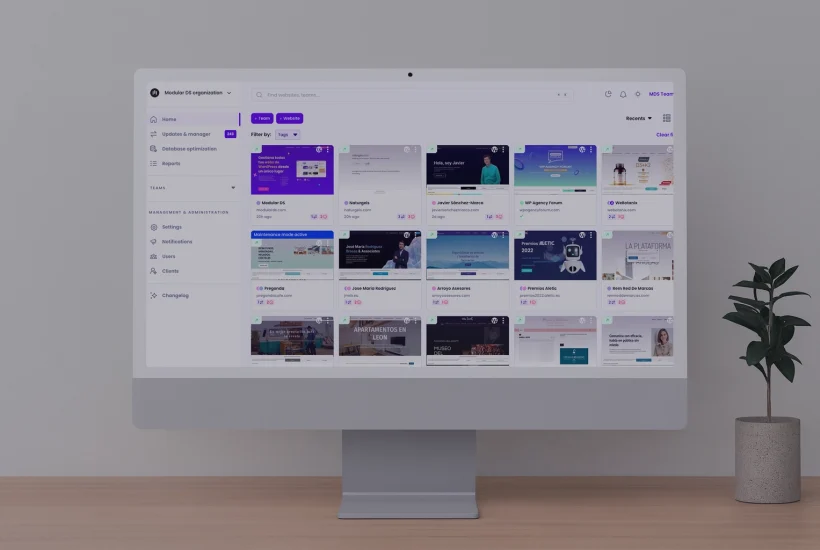
Managing multiple WordPress websites sounds easy until you realize how much time and effort all tasks can actually take. When you only have a few clients, handling maintenance manually might seem manageable, but as your portfolio grows, it becomes harder to sustain and less efficient. It also increases the chances of missed updates, security issues, or unexpected downtime. And skipping maintenance is not an option either.
That’s where WordPress site management tools help. They automate updates, backups, monitoring, and security from a single dashboard, allowing you to save time and focus on other tasks while knowing your sites are safe and healthy. Plus, you don’t have to log in to each site one by one.
In this guide, we’ll look at five platforms that can make managing your sites more efficient, along with a few tips to help you choose the right one for your needs.
Table of contents
Key factors when choosing a WordPress site management tool
While there isn’t an all-in-one site management solution that’s perfect for everyone, here are some important things to consider when choosing one.
Ease of use
Most tools promise to be easy to use, but the actual user experience feels very different from one to another.
The ideal site management platform should be easy to set up and intuitive to navigate for both beginners and experienced professionals. A clean interface with a clear overview of all your sites can make a big difference, helping you work faster, stay organized, and quickly spot what needs attention.
Product updates and support
A tool that receives frequent updates, improvements, and new features usually shows that it’s being actively developed, listening, and adapting to users’ needs.
Customer support is just as important. When you need help or run into an issue, you want a responsive team that’s easy to reach, understands the kind of work you do, and actually solves your question or problem.
Reviews can give you a good idea of what to expect, as users often highlight whether feedback is listened to, and whether support feels helpful or frustrating.
Security and vulnerability management
Most web professionals already use security plugins, but having security features integrated into your site management tool gives you an important advantage.
There are platforms that can warn you when an installed plugin or theme has a known vulnerability, help you apply security updates in bulk, and add temporary protection while you wait for an official patch.
This means fewer tools to handle (and fewer subscriptions to pay for) to monitor and keep your WordPress sites safe, and one less thing to worry about in the long run.
Pricing and scalability
Pricing may not be the most exciting part, but it’s always important in keeping your budget predictable and under control.
Some WordPress site management solutions charge per website. Others offer fixed subscription plans. Core features may be included, while others, like backups or reports, might come as paid add-ons.
Before deciding, consider how many sites you manage now, and how many you might manage in the near future. Fixed plans usually make it easier to estimate costs as your business grows. Pay-per-site or add-on models can be flexible, but they often make long-term expenses harder to predict.
Data privacy and compliance
When managing WordPress sites for clients, it’s worth understanding how your platform stores data, like backups or reports.
For professionals or agencies working with clients in the EU, tools hosted in Europe make compliance easier because all data stays under GDPR. Others may use US infrastructure or third-party storage.
Having clarity about where and how personal data is handled helps you stay compliant and gives your clients more confidence.
5 best tools to manage multiple WordPress sites
Once you know what to look for, the next step is choosing a tool that fits the way you work.
Below are five popular options in 2026. They all help you manage and monitor multiple WordPress sites from one place, but each one has its own strengths, pricing model, and approach.
To make things easier, we’ve included a quick comparison table first. Click any platform name to jump to the full overview below.
Quick comparison of site management platforms
| Platform | Free trial or version | Price example for 25 websites* | Strengths & Limitations | Ratings (G2 / WordPress.org) |
| Modular DS | Yes | $34/month on the Starter plan (billed yearly), including core features. | Modern, easy-to-use dashboard with a strong feature set. GDPR-friendly solution, responsive support, and frequent product updates.
Virtual patching is available via the Patch & Protect paid add-on. |
G2: 4.9/5
WP.org: 5/5 |
| ManageWP | Yes | $125/month with backups, uptime monitoring, client reports, and security checks. Other features require additional paid add-ons. | Long-established tool with a solid set of features.
Dated UI, unclear data hosting, and slower development. Pricing can be hard to predict because many essentials are paid add-ons per site that add up quickly. |
G2: 4.2/5
WP.org: 4.6/5 |
| MainWP | Yes | $16.6/month (billed yearly) for the PRO bundle. Licenses for third-party integrations come at an additional cost. | Self-hosted and privacy-focused solution.
More technical to set up and maintain, with a steeper learning curve. Key features require extensions and installing multiple plugins. |
G2: 4.7/5
WP.org: 4.9/5 |
| InfiniteWP | Yes | $28.91/month on the Freelancer plan (billed yearly), including core features. | Self-hosted option with core features included in paid plans.
Technical setup and ongoing server maintenance required. Slower development. |
G2: 4.1/5
WP.org: 4.4/5 |
| WP Remote | Yes | $41.65/month (billed yearly) for the Essential plan. | Strong security tooling and staging features on higher tiers (Premium and Advanced). Features like backups/scans every 12 hours are sold as paid add-ons.
Generally, this tool is more expensive than its alternatives, and costs can rise quickly as site count grows. |
G2: 4.6/5 WP.org: 4.6/5 |
*Pricing may vary depending on the selected plan and add-ons. We recommend checking each vendor’s site for current figures.
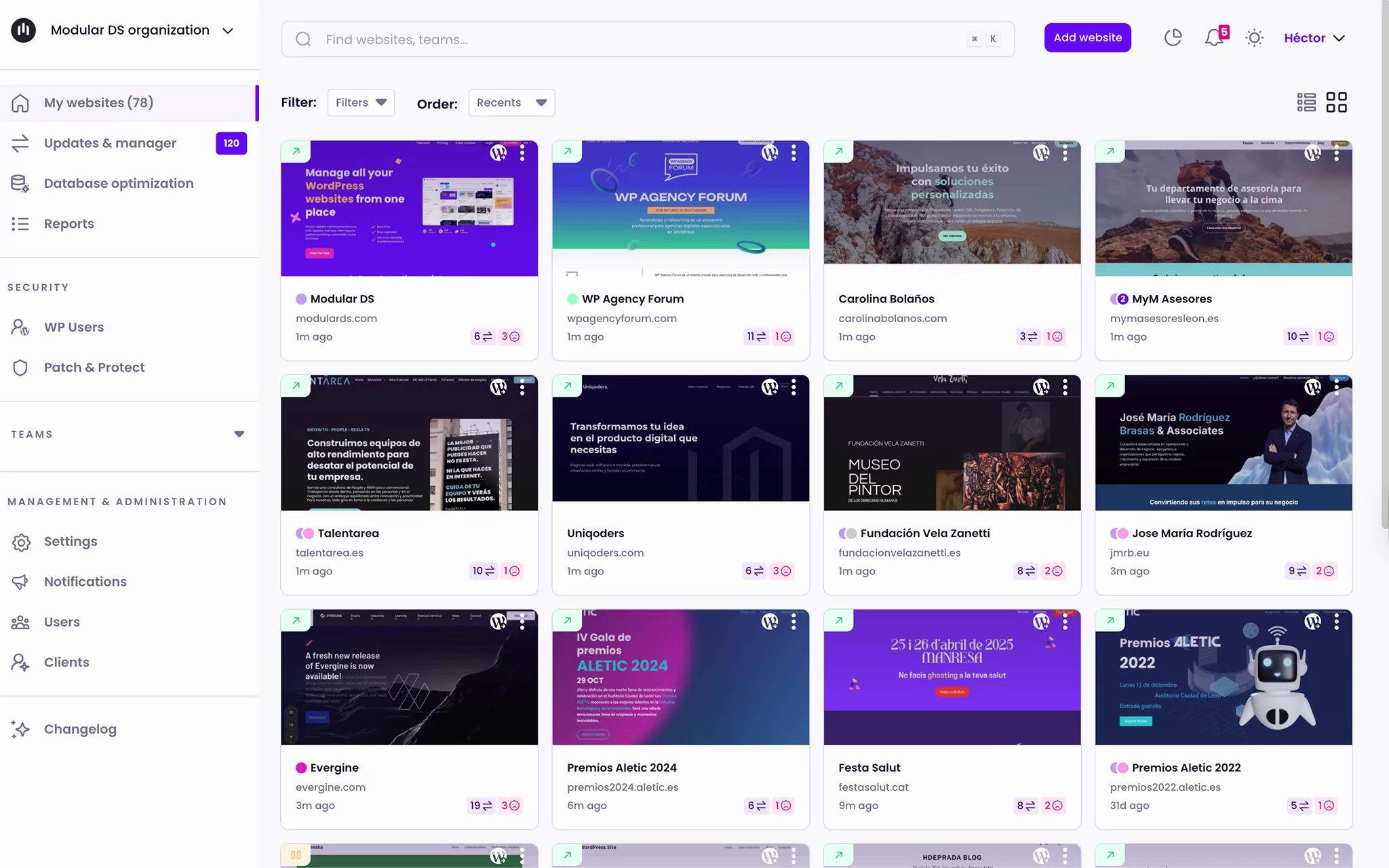
Modular DS
Modular DS is an all-in-one platform for freelancers and agencies who want a simple yet efficient way to manage their WordPress sites. Compared to more traditional tools, it stands out for its intuitive interface, responsive support, and continuous product updates.
It offers bulk and safe updates, GDPR-compliant backups, uptime monitoring, security scans, and automated client reporting with Google Analytics, PageSpeed, Search Console, and WooCommerce integrations.
Beyond standard site management features, Modular DS includes other helpful options such as smart automated updates or Update Copilot for safer update management, and pre-maintenance reports that make the value of your service easier to explain and sell.
For extra security and protection, it offers Patch & Protect, an add-on powered by Patchstack that adds virtual patching and hardening measures.
The platform has different subscription plans depending on the number of sites you manage. All include core features and flexible limits (overage), allowing you to add extra sites, users, or storage without upgrading.
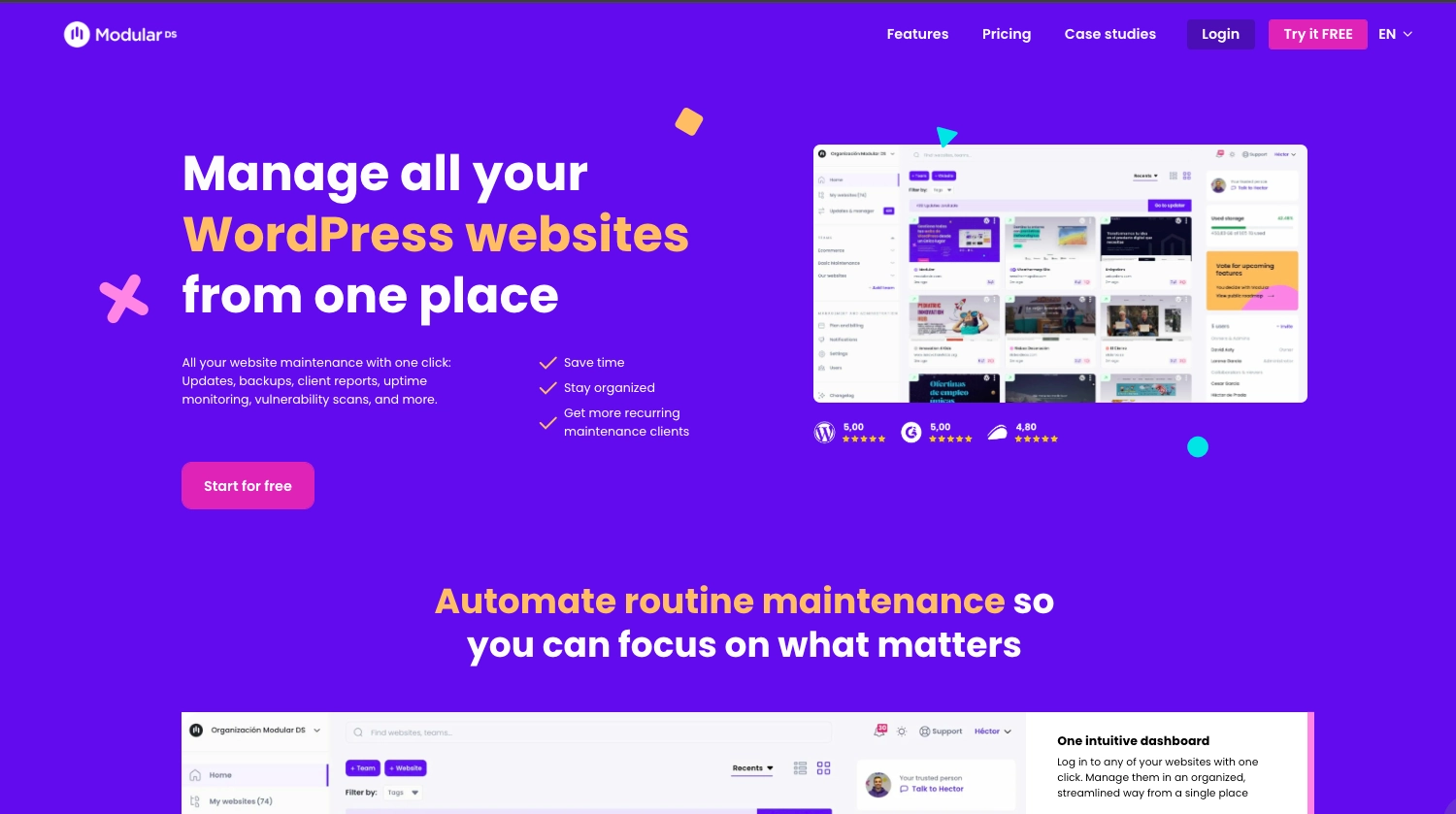
Pricing: Free trial with access to all Modular DS features. Plans start at $16/month for up to 10 websites. Higher plans range between $34 and $99/month (billed yearly).
ManageWP
ManageWP is one of the longest-established site management tools. It offers a centralized dashboard accessible from their website, where you can perform most routine tasks.
Its main features include updates, backups and migrations, site health monitoring, SEO tracking, and client reports.
The platform offers a free plan for unlimited websites. However, many core features, such as safe updates, automated security checks, and advanced backups or reports, are paid add-ons that are charged monthly per site or as bundles. This makes pricing difficult to follow and estimate as the number of your sites grows.
Since the US company GoDaddy acquired the platform almost 10 years ago, it’s unclear where data is stored, and product development has slowed, making ManageWP’s interface feel dated compared to newer tools.
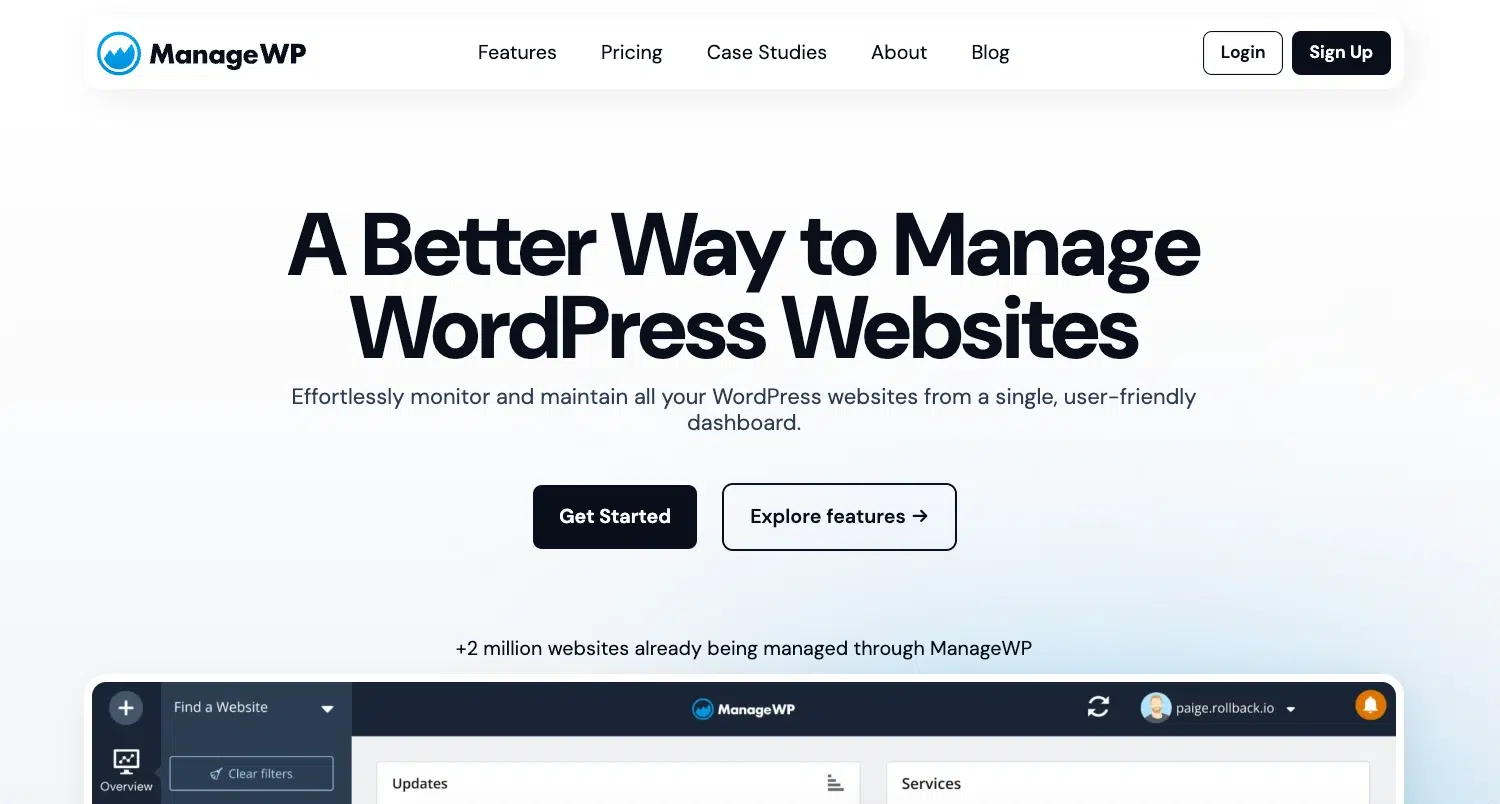
Pricing: Free plan available with limited functionality. Premium add-ons start at $1/month per site. Bundles for up to 100 websites and one or more features range from $25 to $75/month.
MainWP
MainWP is an open-source, self-hosted solution that lets you run your site management dashboard on your own server. This makes it a choice for developers or privacy-focused agencies who want full control over their data and prefer a customizable environment.
While the self-hosted nature provides flexibility, it comes with the responsibility to maintain the server, performance, and security. The configuration process can also be technical and time-consuming, especially for less experienced users.
MainWP works through extensions to add features like backups, uptime monitoring, security scans, and reporting. To set it up, you’ll need to install it on your server and connect each WordPress site through a child plugin.
The platform integrates with popular tools, like UpdraftPlus and Wordfence, and offers ticket and community support.
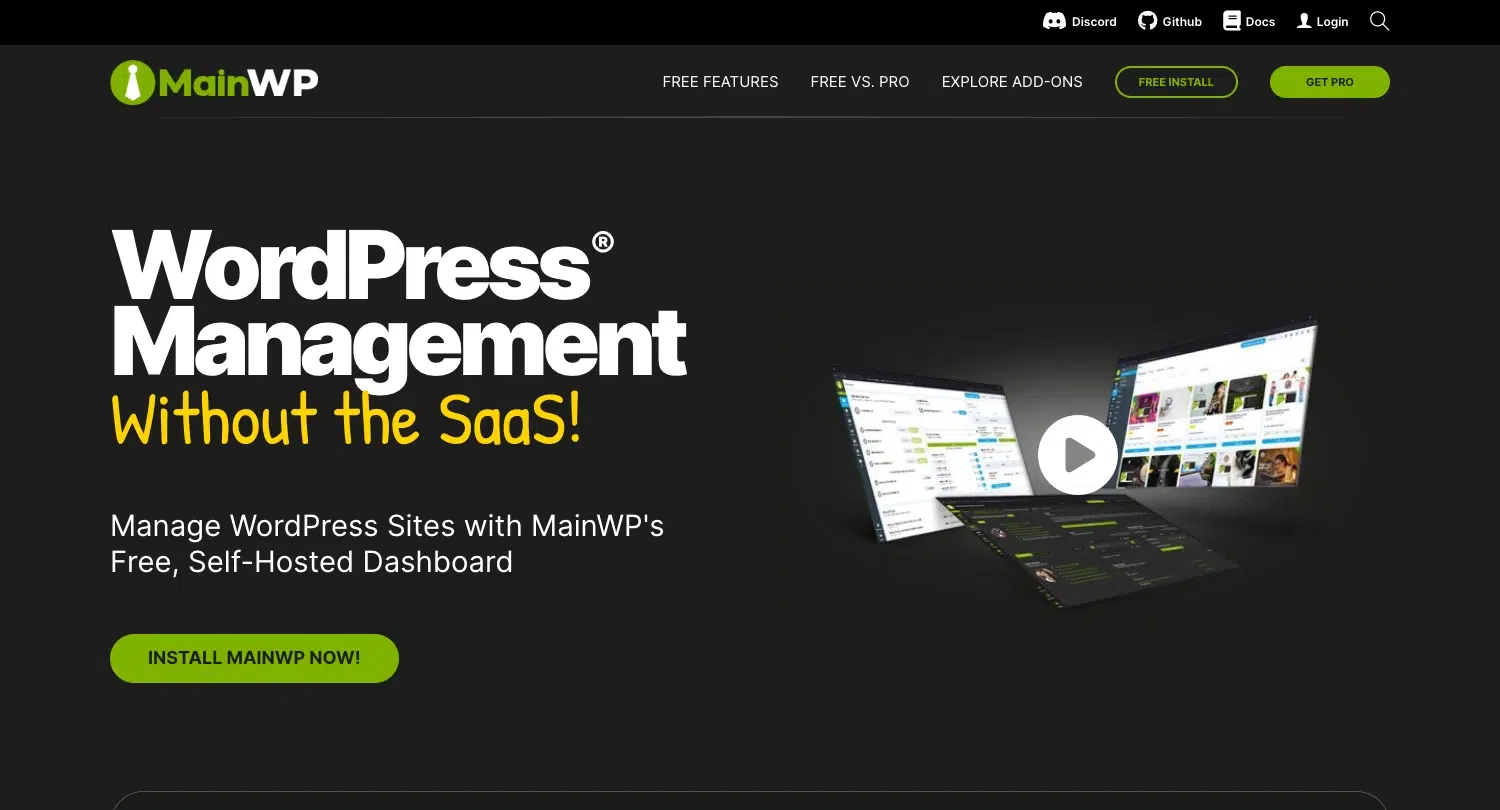
Pricing: Free with limited core features. Premium add-ons or extensions require a PRO bundle starting at $199/year. Some licenses for third-party integrations can require an additional cost. A lifetime license is available for $599.
InfiniteWP
InfiniteWP is another self-hosted tool that centralizes maintenance tasks across multiple WordPress sites.
The free version includes one-click logins, updates, and backups for unlimited websites. Features such as malware scanning, uptime monitoring, staging, or client reporting require a paid plan, as do integrations with third-party tools like Google Analytics or PageSpeed.
The platform uses yearly subscription plans for a fixed number of sites, and all of them include premium features. While InfiniteWP used to be a popular choice among agencies, development and product updates have slowed in recent years.
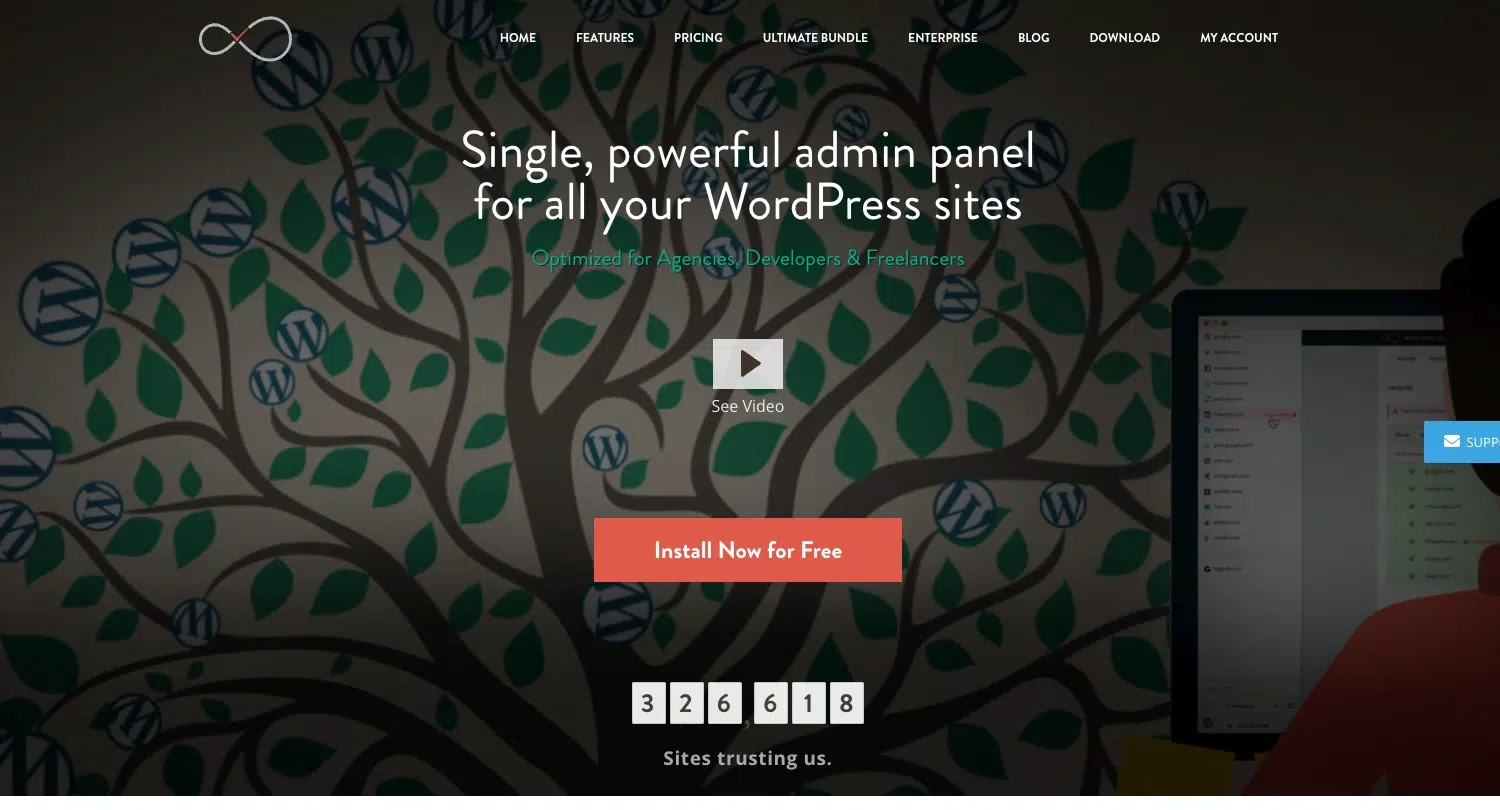
Pricing: Free version with basic functionality available. Paid plans start at $147/year for up to 10 websites and 3 days of email support. Higher tiers for larger site limits and faster support range between $247 and $647 per year.
WP Remote
WP Remote provides a cloud-based dashboard for handling bulk and safe updates, backups, and client reporting. It also includes a staging feature, allowing you to create a safe copy of a site to test changes before pushing them live.
On the security side, the tool offers an AI malware scanner, an integrated web application firewall (WAF), and vulnerability monitoring.
WP Remote uses a per-site pricing model with different subscription plans, depending on the features you need. More advanced capabilities, such as real-time backups or hourly scans, are sold as separate add-ons billed yearly per website.
It also has a free plan, but it includes only basic features like plugin and theme management, bulk updates, and simple client reports.

Pricing: A free plan with basic features is available. Plans range from $1.99 to $19.99 per site/month, depending on which features (backups, safe updates, security, staging, etc.) are included.
Final thoughts
Managing multiple WordPress sites efficiently means building a workflow that’s reliable and scalable, without adding more complexity to your day.
Your choice of tool ultimately depends on what you prioritize and value most: ease of use, automation, security, scalability, GDPR-friendly hosting, open-source flexibility, etc.
Whichever direction you take, make sure your setup covers the essentials: updates, reliable backups, strong security, uptime monitoring, and client reporting. These pillars are what turn routine WordPress maintenance into a professional, profitable service that your clients will trust.
Modular DS brings all of these pieces together in a single user-friendly dashboard. You can try it free for 14 days and see how much time it can save you on day-to-day WordPress site management. And if you decide to switch from another platform, we offer free migration support to help make the transition.
Managing multiple WordPress websites FAQs
What’s the best WordPress site management platform for agencies or freelancers?
If you want an all-in-one platform that prioritizes ease of use, reliable support, and advanced functionality, Modular DS is one of the strongest options for agencies and professionals. For users who prefer a self-hosted setup and more control over their environment, MainWP remains a solid alternative.
If you’d like a deeper comparison, you can also take a look at these guides:
What are the key tasks included in WordPress website maintenance?
Core WordPress site management tasks include:
- Updating plugins, themes, and WordPress core
- Performing automated backups
- Monitoring uptime, performance, and overall site health
- Checking for vulnerabilities and security issues
- Client reporting
Why use a WordPress site management platform instead of individual plugins?
Individual plugins are fine for single sites, but they don’t scale well. A dedicated management tool reduces the risk of missed updates or failed backups and provides a single source of truth for uptime, performance, and security across all your sites.
Can I use WordPress Multisite to manage several websites?
Multisite can be useful if all sites share the same hosting and structure (for example, a network of regional sites for one brand). However, for agencies and professionals managing independent client websites, external management tools are more flexible and secure.
How often should I back up WordPress sites?
For most business sites, daily backups are enough. For e-commerce or membership sites with frequent changes, hourly or incremental backups are recommended. The key is automation and off-site storage. Our backup guide for client site maintenance explores the best tools and strategies in detail.
How can I monitor uptime and performance across multiple sites?
Most management platforms include uptime and performance tracking. You can get alerts when a site goes offline, an SSL certificate expires, or response times drop. This helps you fix problems before clients notice.
Are WordPress site management tools secure?
Yes, as long as you choose a provider that follows best practices and secure connections. Look for solutions that use secure, revocable authorization (instead of storing admin passwords), encrypt communications, and provide controls to disconnect or rotate access if needed. Regular updates and transparent documentation also matter.