Should you add answer engine optimization (AEO) to your WordPress care plans?
Answer engine optimization (AEO) is worth offering as a service to your clients, but only if you package it honestly and don’t promise outcomes you can’t measure. AI Overviews, ChatGPT, and Perplexity are now part of how people are searching, and your clients are probably starting to notice. Some are already asking what to do about it, and the rest are likely to start asking soon.
Rather than create a new service category, freelancers and agencies can extend the maintenance work you already do to cover what clients will want next. The main points to consider are whether to package AEO as a paid add-on, how to scope it, and how to talk about it with clients without overselling.
A terminology note: this post uses “answer engine optimization” (AEO) for the same concept others call AI search optimization, generative engine optimization (GEO), or AI SEO.
Table of contents
What answer engine optimization actually involves
The underlying shift is the same: AI engines are now extracting direct answers from web content and surfacing them as the first thing users see, whether that’s a Google AI Overview, a ChatGPT citation, or a Perplexity answer card.
AEO splits into two separate goals. Brand mentions are when AI tools name your client in a response or comparison; citations are when they cite your client’s content as the source of an answer.
Mentions come from PR and third-party coverage. Citations come from structured, directly answerable content on the client’s own site. Research from AirOps and Semrush, reported in Search Engine Land, found 85% of brand mentions come from external domains, and only 6 to 27% of frequently mentioned brands are also top-cited sources. A full AEO offer needs two tracks: on-site content work to earn citations, and PR or third-party placement work to earn brand mentions.
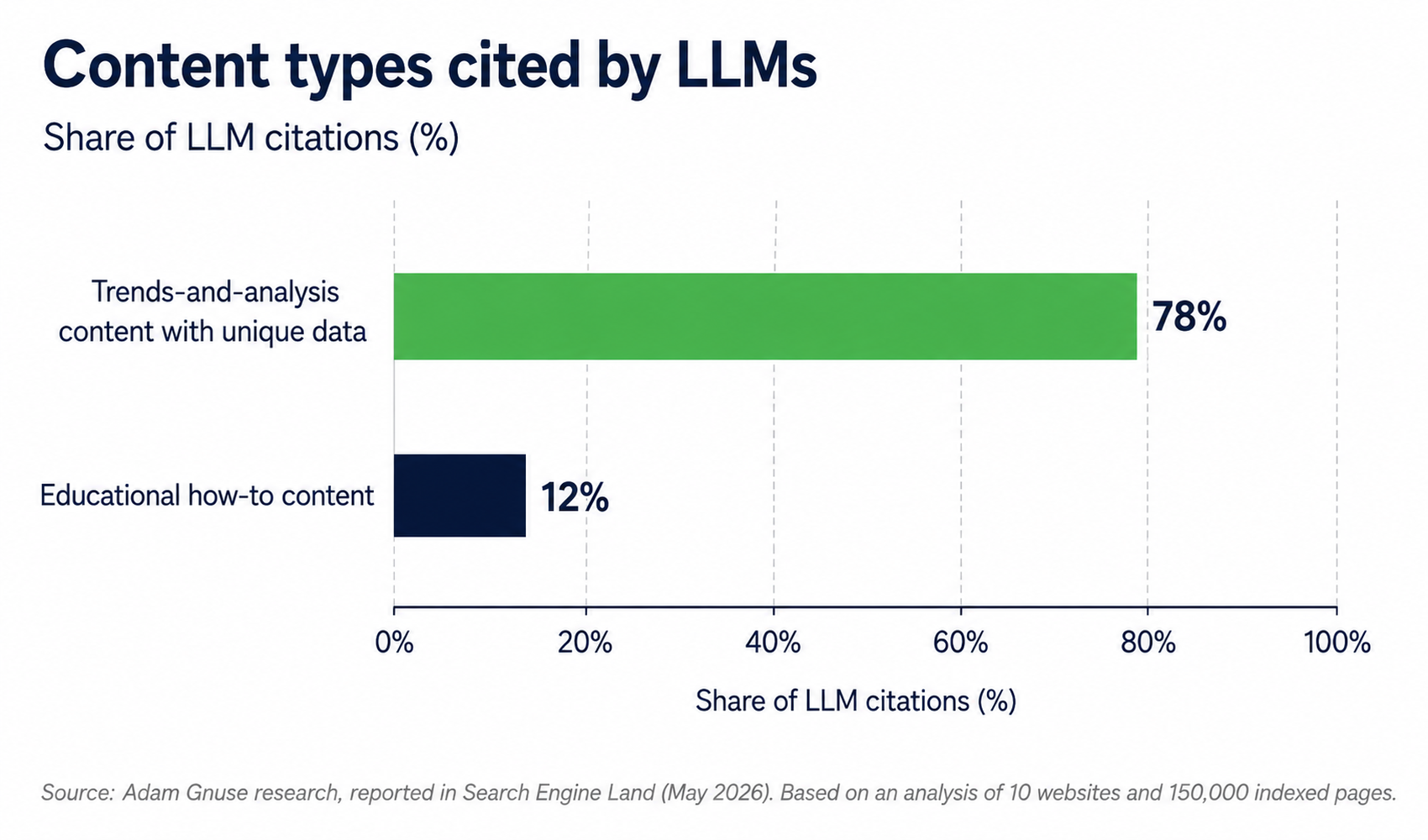
In an analysis of 10 websites and 150,000 indexed pages, Adam Gnuse found that trends-and-analysis content with unique data attracted LLM citations 78% of the time, compared with 12% for educational how-to content. For agencies building AEO content with clients, that points toward original research and proprietary data over generic how-to articles.
The practical techniques are close to existing technical SEO; what changes is the content type those techniques apply to:
- Structured data: Use schema where it matches the page: Article or BlogPosting for editorial content, Product for product pages, Organization or LocalBusiness for entity clarity. Treat it as technical hygiene, not a shortcut to AI citations. Google says no special schema is required for generative AI search.
- Clear factual content with direct answers: Posts that lead with the answer to the question they’re titled around get cited more often than ones that build up to the point.
- Entity-based structure: Content organized around named topics, products, and people reads more like the kind of source AI engines prefer to cite.
- Source attribution: External-link references to data, studies, and authoritative sources help engines treat your site as a citable authority.
What’s getting overhyped: vague “writing for LLMs” advice, schema overkill on pages that don’t need it, and proprietary “GEO frameworks” being sold by people with no demonstrable track record.
Why this fits naturally into a care plan
Care plans are already built around monthly access to client sites. AEO work fits the same cadence as the updates, backups, performance checks, and month-end reports you already run.
A typical month of AEO maintenance looks like:
- Schema audits: Confirm Article and Product markup is still valid after content or theme changes.
- FAQ section reviews: Update existing answers, add new ones based on questions the client is hearing from customers.
- Content freshness checks: Review older posts to ensure facts, dates, and links stay current.
- Search Console tracking: Watch for the visibility shifts that signal AI Overview impact (more on this below).
None of that is a new service line. It’s the maintenance work you already do, extended into the category clients are now asking about. That makes the upsell cleaner: you’re widening what their existing plan covers, not selling them something new.
Scoping, packaging, and pricing the service
The cleanest way to package AEO is in three layers:
- AEO readiness audit: A one-off engagement to assess where the client’s site stands today: schema coverage, content structure, citations, current AI-search visibility. Fixed-price.
- Monthly AEO monitoring: Ongoing schema validation, Search Console tracking for AI Overview signals, content freshness checks. Folds into a care plan tier.
- Ongoing AEO content work: Higher-tier engagement for clients who want active optimization of priority pages: new FAQ sections, restructured content, entity-rich rewrites. Hourly or monthly retainer.
The audit tier is where most agencies should start. It mirrors how many already deliver SEO audits for clients, so the workflow and reporting format are familiar, and only the checklist changes.
Regarding packaging, you can either add AEO as a higher tier within the existing care plan or sell it as a separate add-on. Bundling into a tier makes the upsell easier for clients already on a plan. Selling separately keeps the pricing honest if the work scales differently from the rest of the maintenance scope. Both options work, but the right call depends on how your existing plans are structured.
When it comes to pricing, there isn’t a settled market rate yet. Audits typically fall within fixed-price territory and scale with site complexity (eCommerce and high-volume content sites require more work than a brochure site). Monthly monitoring layers cleanly onto care plan retainers. Pricing this is harder than pricing maintenance because the work hasn’t stabilized into routine yet. Review your AEO pricing more often than you would for stabilized services; think every quarter rather than annually.
How to sell it to existing maintenance clients
The conversation that works is about visibility, not features. Your client’s site needs to be findable in ChatGPT, Perplexity, and Google AI Overviews. The question is whether those tools are pulling answers from your client’s site or a competitor’s.
Three concrete data points open the conversation:
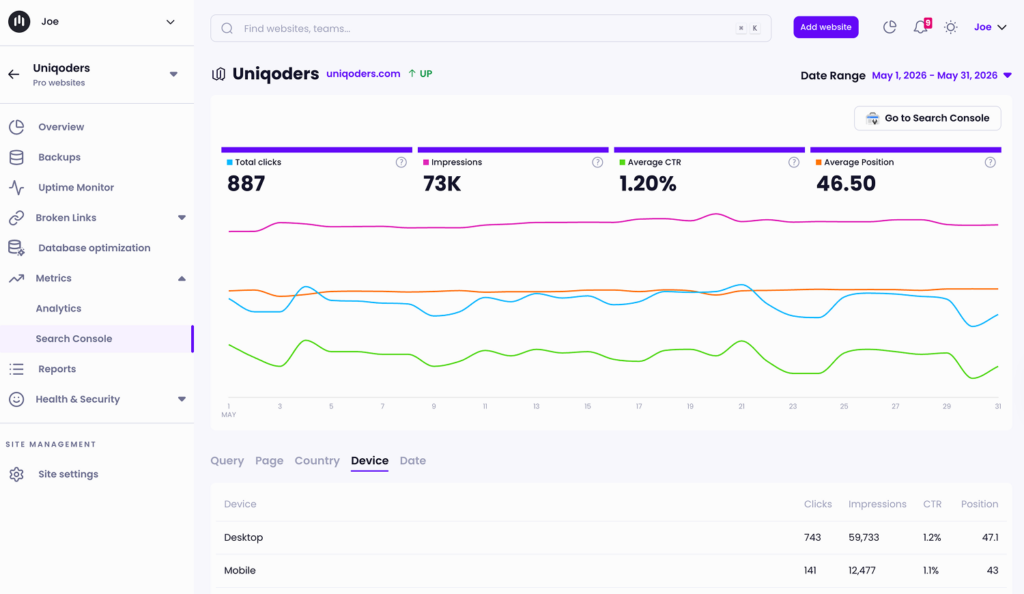
- Declining organic clicks for stable impressions: Worth investigating, especially on queries where AI Overviews appear. Search Console shows the pattern but doesn’t prove AI Overviews are the cause.
- Competitor presence in AI Overviews: Searching the client’s priority queries and seeing competitors cited gives a fast, demonstrable hook.
- Baseline data you already have: You’ve been in their Search Console for months, so you can show them what’s changed.
The “we already trust you with maintenance” advantage makes this an easy sell. You have access to their site, data, and reporting, so you can show baseline-vs-after numbers without negotiating new tool access.
A central dashboard like Modular DS makes each client’s Search Console data accessible from one place, so you can run through the AI Overview signal check faster than logging into separate GSC accounts.
One common objection: “Isn’t this just SEO?” For Google, AEO largely is, since AI Overviews and AI Mode use Google’s Search systems. For ChatGPT, Perplexity, and other answer engines, the strategy shifts toward content that is clear, well-sourced, entity-rich, and directly answerable.
Be honest about what you can’t promise
The agencies that win this transition are the ones building client trust during a messy phase. That means being upfront about what’s currently knowable and what isn’t.
What you can’t promise:
- AI search rankings: Nobody has a guaranteed playbook for placement in AI Overviews or ChatGPT citations, including the engines themselves. The signals are partly observable and largely opaque.
- Fast, attributable results: Traditional SEO wins compound slowly. AEO wins are slower and harder to attribute. Baseline metrics help, but a clean “we did X, traffic went up Y” narrative is rarely available.
- Future-proofing: The space is moving fast. The techniques that work in 2026 may not work in 2027. Any agency selling AEO as a stable, long-term service is selling something nobody has yet.
Some agencies are already charging premium prices for AEO services without demonstrated ROI. Don’t be one of them. When a client asks for guarantees, the right answer is sometimes “we don’t know yet, and anyone telling you otherwise is guessing.” Clients respect that, and they’ll remember it when the dust settles.
How to add AEO to your offering
Three things matter if you decide to do this: pick a scope you can actually deliver and sustain, package AEO as an extension of the maintenance work you already do rather than as a stand-alone service, and price it as evolving work to review quarterly rather than annually.
The simplest place to start is a one-off AEO readiness audit on one client this month: schema check, FAQ review, content structure, Search Console pass. The scope, pricing, and packaging questions become clearer once you’ve delivered the work once.
The agencies that emerge from this transition with stronger businesses will be the ones that earned clients’ trust during a phase when nobody had clear answers. It’s a longer game than chasing the next acronym, and a better one.
Frequently asked questions
What is answer engine optimization?
Answer engine optimization (AEO) is the practice of preparing website content for citation by AI search tools like ChatGPT, Perplexity, and Google AI Overviews. It’s the same concept sometimes called GEO (generative engine optimization) or AI SEO. The techniques include structured data (Article and Product schema where relevant), clear factual content, entity-based structure, and source attribution.
How is answer engine optimization different from regular SEO?
AEO and traditional SEO share techniques but not strategy. Research by Aleyda Solis found that homepages or brand-entry pages captured 57.7% of AI traffic in her top-page sample, but only 3.0% of AI citations. Homepages get the brand-search clicks from AI tools; deeper specialist content (blog posts, product pages, FAQs) is what AI cites as its source. This means you should optimize each differently: brand presence on the entry pages, citable detail on the specialist pages.
What are the best answer engine optimization tools?
Most current tools are extensions of existing SEO tooling rather than purpose-built AEO platforms. Schema.org’s validator and Google’s Rich Results Test cover schema basics. For tracking AI Overview impact, Google Search Console plus a multi-site dashboard like Modular DS gives you visibility shifts at portfolio scale. Purpose-built AEO platforms are still in their infancy.
Should I add AEO to my existing care plans or sell it as a separate service?
For agencies with an existing tiered care plan, the cleanest path is usually to add AEO as the highest tier rather than spinning up a separate service. Bundling means easier upsells to existing clients and a familiar billing rhythm. Sell separately only if the work scales very differently from the rest of your maintenance scope.