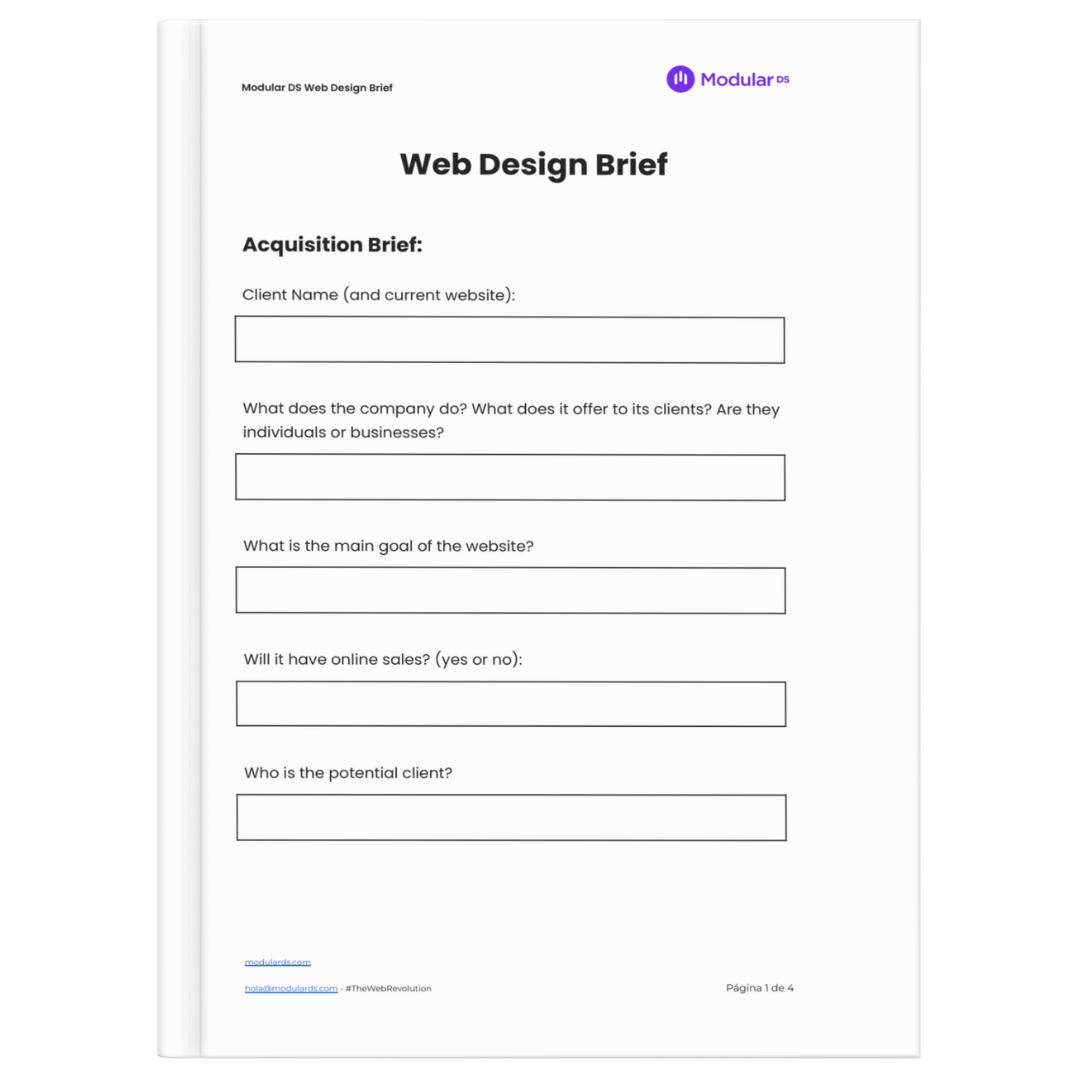
If you decide to send the brief for your client to complete on their own, make sure to ask them to include as much detail as possible. This will simplify the process and help prevent misunderstandings.
If you prefer to complete the brief together with your client, whether in person or via video call, you’ll have the opportunity to explore important topics and clarify any doubts. You can also leverage your experience to guide the client and contribute new ideas to strengthen their online presence.
Once the brief is ready, you can begin your work with confidence, ensuring that each point is addressed and nothing is overlooked.
Project goals: What does your client want to achieve with the website? Do they want visitors to get in touch, improve their online image, retain customers, or sell products directly? Clearly defining these goals guides all subsequent decisions. Ideally, the project should have one main objective, with additional secondary goals as needed.
Target audience: Understanding the target audience is crucial. Is the site aimed at other businesses (B2B) or individual consumers (B2C)? Within B2C, identify key demographics such as age, gender, and interests (e.g., sustainability, sports, fashion). Creating customer personas can help clarify user needs and improve the effectiveness of calls to action (CTAs) and featured website sections.
Website content and structure: Define what information the website should include and how it should be structured. This typically involves creating a sitemap or navigation outline. The more detail the client provides, the easier it will be to align the project with their expectations, reducing the risk of later revisions that cost time and resources. Existing brochures or websites can serve as helpful starting points.
Restrictions and limitations: Identify any restrictions that must be respected, such as legal requirements, industry regulations, or brand guidelines. This could include specific words, expressions, or imagery that should be avoided to maintain credibility and compliance. The client should clearly state these from the beginning.
Style guide and visual assets: Check if the company has an established brand identity, including logos, typography, and colors. Also, confirm whether they have their own photos and videos or prefer to use stock materials. This ensures design consistency from the start.
Stakeholders: Identify all the people directly involved in the project. For small businesses, this may only include the owners or managers. For larger projects, you’ll need a list of stakeholders with their roles and contact details. This prevents confusion and facilitates communication and coordination.
Competitors: Analyzing direct competitors is key. Understanding their strengths and weaknesses provides insights into the sector and helps you create a proposal that differentiates your client from others.
Budget: Clarify the available budget from the outset. A clear figure ensures the scope of the project is realistic and avoids wasted time on proposals that later prove unfeasible.
Timeline and deadlines: Define clear deadlines for project delivery. While clients often want quick results, it’s better to establish a phased timeline with milestones for drafts and deliverables. This structure will help you stay organized, keep the project on track, and manage expectations.